Under Section 72 of the Commonhold and Leasehold Reform Act 2002, the right to manage can only be acquired if the premises consist of a self-contained building or part of a building. Section 72(3) specifies that for a part of a building to be self-contained, it must constitute a vertical division of the building and the structure of the building must be such that it could be redeveloped independently of the rest of the building. Recently, the Court of Appeal considered two appeals in respect of whether premises over which the right to manage had been claimed were a self-contained part of a building.
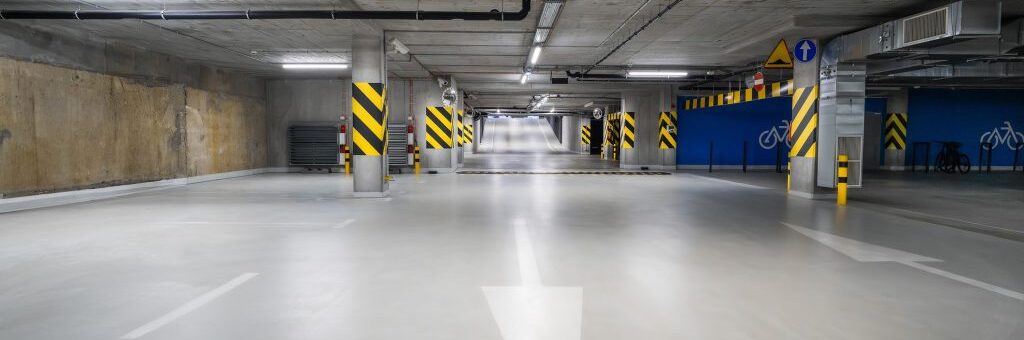
The first case concerned three blocks in a complex of five blocks. The blocks were separate from each other but there was a large car park underneath the complex. The First-tier Tribunal (FTT) decided that none of the blocks was a self-contained part of a building. The second case concerned a terraced house divided into flats. The FTT found that a vertical division of the relevant part of the house was created by the party walls within the terraced structure. The house could also be independently redeveloped. Those decisions were upheld by the Upper Tribunal (UT), which heard the cases together as they raised similar issues.
Ruling on the appeals against the UT’s decision, the Court considered that the test for whether a part of a building constituted a vertical division of the building was a physical one. The wording contrasted with the hypothetical test of whether it could be redeveloped independently of the rest of the building. The Court agreed with the UT’s conclusion in the first case that the undivided space in the underground car park was not part of ‘self-contained premises’ in the ordinary sense, but was open plan and undivided. The Court also agreed with the UT that dividing management responsibilities for the car park between an RTM company and other parties would be impractical.
In the second case, the landlord argued that, as the foundations of the house spanned under neighbouring properties, they were part of the premises over which the right to manage was claimed. However, the landlord accepted that, where there were party walls in a terrace, the boundaries could be identified for the purposes of the right to manage by taking a notional line through the centre of the wall. The Court agreed with the UT that there was no sensible reason why the same notional line should not be extended down through the foundations.
The landlord argued that for a building to be capable of being independently redeveloped, it must be possible to redevelop it without needing the consent of the owners of any neighbouring premises and without impacting on their properties. However, the Court agreed with the UT that the requirement was only that the relevant part of the building could be redeveloped without the rest of the building being redeveloped at the same time. The test was about the building and its structural features. Rejecting the landlord’s argument that redevelopment required the complete removal of absolutely everything, down to the sub-floor foundations, the Court considered that if the house were to be gutted, leaving the foundations and outer walls, that would clearly amount to redevelopment. Substantial rebuilding schemes involving less than that might well also constitute redevelopment.
Dismissing the appeals, the Court concluded that the UT’s decisions in both cases were correct.